SECURITY CONFIDENTIAL
Security Confidential S2 E2 Lead House
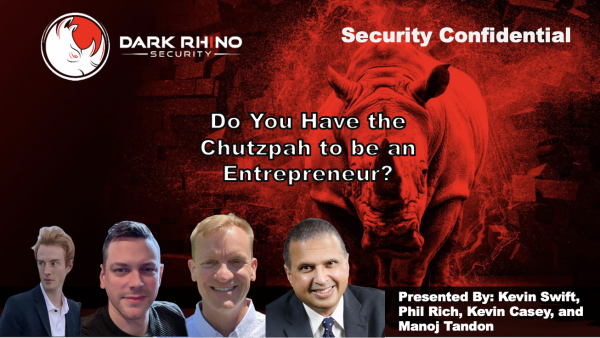
This week on Dark Rhiino Security’s Security Confidential podcast, Host Manoj Tandon welcomes Phil Rich and Kevin Swift from Lead House. The discussion is unscripted, real, and emotional. Dark Rhino Security is a purpose built cybersecurity managed security services provider, cybersecurity consultancy, and risk management firm. Lead House is a digital innovator helping customers build their digital […]
Video
This week on Dark Rhiino Security’s Security Confidential podcast, Host Manoj Tandon welcomes Phil Rich and Kevin Swift from Lead House. The discussion is unscripted, real, and emotional. Dark Rhino Security is a purpose built cybersecurity managed security services provider, cybersecurity consultancy, and risk management firm. Lead House is a digital innovator helping customers build their digital fronts, services, and underlying technologies.
Do you have the chutzpah to be an entrepreneur?
Chapter Titles:
00:14 Entrepreneurship, Education, and Work Ethic
02:18 The Trade-Offs and Pressures of Building a Business
05:55 Why Passion and Self-Belief Matter More Than Degrees
13:05 Defining a Startup and Standing Out in Tech
20:08 Risk, Sacrifice, and the Reality of Startup Life
30:31 Blue Ocean Strategy and Innovation Through Differentiation
37:10 The Biggest Challenges Entrepreneurs Face
Audio:
Spotify Embed: S2 E2 Do you have the Chutzpah to be an Entrepreneur?
Important Links:
Transcript
Manoj Tandon: Good morning, everyone. Welcome to another episode of Security Confidential. Today, we have some very interesting guests on our show. We have our own Kevin Casey, who’s our fearless leader. We also have Philip Rich on the show as well. Phil is a partner of Dark Rhino, and his company, Lead House, does a lot of work with us. He’s one of the co-founders of Lead House and has been kind enough to join us this morning along with his partner, Kevin Swift, who is also a co-founder of Lead House. Good morning, gentlemen. Thanks for joining us on the show today. I appreciate you guys being here.
Philip Rich: Thank you for having us, guys.
Kevin Swift: I think we have a debut on our side, but also on Kevin’s side. I think it’s the first one he’s joining on the Dark Rhino team.
Kevin Casey: That’s exactly right.
Manoj Tandon: Kevin does not usually get on these shows, and this is a first for him. We’re pulling him out from the back room to the front.
Kevin Casey: I feel like I just got off the practice squad for an NFL football team. I didn’t really make the team, but they asked me to fill in because the punter got sick.
Kevin Swift: I thought it was because you were excited to talk to me and Phil.
Manoj Tandon: No, that’s simply not the case. These shows are a volunteer lineup. In this instance, everybody stepped back and Kevin was the last one standing.
Kevin Swift: Wait, you’re saying we’re not getting paid for this?
Manoj Tandon: Maybe a bottle of bourbon.
Kevin Swift: You guys are Canadian. Does Canada allow shipment of alcohol across the border?
Philip Rich: I don’t know actually.
Kevin Swift: I’m pretty sure the duties are probably through the roof if they do.
Philip Rich: Canada is one thing, but then you have to deal with the SAQ in Quebec, which is another layer of annoyance for alcohol.
Manoj Tandon: Everyone listening to this show, we have essentially four entrepreneurs on right now. I wanted to start with a topic and a question for everyone here. This is now Manoj’s personal belief: there is very little correlation between your level of education and success as an entrepreneur or success in life.
Kevin Swift: I agree with Manoj here. One of the reasons is that it’s very hard to teach work ethic. Entrepreneurs are a different breed of people. They’re the people who feel sick to their stomach working 12 hours a day, but it’s also what gets them up the next morning. The issues and challenges are what drive them.
Kevin Casey: I agree. For me, and this is my ninth company, entrepreneurship is more of a marathon than a sprint. Since Manoj and I started this organization three years ago, we’ve gone through equity partners who thought we should already be where we are today from day one. Building a business takes time, and I think that’s important advice for entrepreneurs.
Manoj Tandon: Phil, your thoughts on whether a degree or heavy education is necessary?
Philip Rich: I do have a degree in urban planning, and some of the classes helped me with marketing, reporting data points, and making decisions for clients. It gave me an edge in PPC and funnel creation. But honestly, that’s probably the only aspect of the degree I’d keep. I think I’d still be at the same stage professionally without it.
Manoj Tandon: Even in the tech industry, we see self-taught developers who are often better problem-solvers than those with formal education. A lot of university programming courses are outdated compared to what companies are actually using.
Kevin Casey: One thing I would add is that it’s okay not to have all the answers. Entrepreneurship taught me that. I came in with education and experience, but very little prepared me for the real challenges. Prior to Dark Rhino, I was a lone entrepreneur and relied on my own faith, belief, and passion. Now, with equity partners, they bring their own skills and experiences. You don’t necessarily need an advanced degree today, but you do need belief in yourself, commitment, passion, and a willingness to accept risk.
Manoj Tandon: Kevin, that’s very well stated. I have a degree in engineering and don’t use any of it directly today, but I do use the ability to think independently. Passion and perseverance matter because entrepreneurship is a marathon, not a sprint. There was also something else you’ve often said: “What are you willing to trade for what you’re willing to get?” A lot of people want success and money, but there’s a real trade involved there.
Kevin Casey: Nothing’s free. It’s about balance. When you run a business, you’re pulled in ten different directions at once. There’s always a fire to fight and a problem to solve. When I was younger, I let those things negatively impact me and I became impatient. Over time, I realized that as the captain of the ship, it’s critical to make decisions based on the best information you have at the time. It’s also important to step away and find balance through exercise, yoga, golf, or anything that resets you mentally.
Philip Rich: You also have to choose your battles and surround yourself with people who fill in the gaps. It’s impossible to know everything. Delegation is critical, especially at the startup level where you’re wearing five or six hats at once. A startup can become a tornado very quickly.
Kevin Swift: That’s one of the biggest differences between startups and corporations. In a startup, every move every employee makes impacts the company because you’re so small. Even though we’re growing, we’re still small compared to the giant corporations.
Kevin Casey: One of the founding principles at Dark Rhino came from Simon Sinek’s idea of “why.” It’s not about what companies do, but why they do it. Entrepreneurship is much more about the “why” because that’s intrinsic and drives better leadership.
Manoj Tandon: What’s the definition of a startup? When do you stop being a startup? Lead House is about to hit its two-year milestone.
Kevin Casey: Years ago in graduate school, I heard it defined this way: as long as a company is still searching for a business model, it’s a startup. Once it has found and can execute on a business model, it’s no longer a startup.
Manoj Tandon: Kevin and Phil, you guys are in technology and web development. You’ve made it two years and you’re growing. How do you differentiate yourselves in the market?
Kevin Swift: Websites and hosting are what we call our “hot dogs.” They’re the quick sales cycles that bring people into the business. But the majority of our work is focused on mobile app development, backend systems, automation, AR, VR, 3D rendering, and game development. That’s where we differentiate ourselves from the average web agency.
Philip Rich: We can’t really sell ourselves as “better developers” because there are good developers everywhere. What differentiates us is the client experience.
Manoj Tandon: Kevin Swift made a comment earlier about startup failure rates being around 90 percent. But I don’t think people should be discouraged by that. We don’t know how many companies quit too early or weren’t truly viable to begin with.
Philip Rich: Timing matters too. You can have the right idea and execution but still be too early or too late. Luck plays a role as well. You hear stories about companies raising half a billion dollars and still going bankrupt. There’s also the problem of hyper-accelerating growth too quickly.
Kevin Casey: Venture capital and private equity often put unrealistic pressure on startups to achieve profitability too fast, which increases the likelihood of failure.
Manoj Tandon: Interestingly, bootstrapped companies tend to have a higher success rate than VC-backed companies. That probably speaks to perseverance, mindset, and self-confidence.
Kevin Casey: Entrepreneurship involves trade-offs. You’re not always going to be done at five o’clock and heading to your kids’ soccer game every day. You have to ask yourself what you’re willing to give up for what you want.
Kevin Swift: Sometimes you feel like you’re drowning and don’t realize success is just around the corner. You constantly debate whether it’s all worth it.
Kevin Casey: People always say I have a high risk tolerance, but I disagree. I think it’s more about understanding and accepting risk. Entrepreneurship requires the determination to wake up every day and keep going no matter what.
Philip Rich: Experience matters because you make better decisions after enough failures. Learning from those failures is what sets entrepreneurs apart.
Kevin Casey: It’s okay to say “I don’t know.” The important thing is having the willingness to go out and find the answers.
Philip Rich: We see that with developers too. The best developers are often the ones willing to dive into something they don’t fully understand yet and figure it out.
Kevin Casey: Back in the 80s and 90s, companies like Procter & Gamble and GE had executive training programs that rotated people through finance, HR, and sales because they wanted well-rounded leaders who understood multiple aspects of business. That experience helped them make better-informed decisions later.
Manoj Tandon: That also gave people opportunities to “fail successfully.” There can’t be success without failure, and operating in gray areas forces people to grow.
Philip Rich: As a person, you have to tolerate risk, but as a business, you also have to tolerate how many financial failures you can survive.
Kevin Casey: We’ve gone up against billion-dollar companies in RFPs and still came in second multiple times. Even though losing hurts, the fact that we were even competing at that level was huge. Large corporations often choose the safer option instead of innovative companies like ours.
Kevin Swift: Big corporations are like container ships. They’re slow to turn. Startups are like speedboats. We can pivot quickly and adapt faster.
Kevin Casey: One of our other founding principles at Dark Rhino was Blue Ocean Strategy. Manoj eventually understood how important value innovation was.
Manoj Tandon: Differentiation is key to any business. You can innovate by creating a totally new product, but those ideas are rare. Value innovation is different. You can operate in an existing market but fundamentally change the value offering so that you create your own “blue ocean” where competition becomes less relevant. But turning that vision into strategy was painful. We failed a lot. We can tell you about 2,000 things that didn’t work before we found one or two that did.
Kevin Casey: Kevin and Phil, something I respect about your partnership is your ability to disagree respectfully but still have each other’s backs. That’s critical with equity partners.
Philip Rich: One hundred percent. We definitely have different ways of thinking, and we argue sometimes, but at the end of the day, we know we can rely on each other to get the job done. That comes with experience and trust.
Kevin Swift: Even when my kids wake me up at five in the morning, ten minutes later I’m back on the computer looking at projects and reassessing where we are. That’s passion.
Manoj Tandon: As we wrap up, I’d like to ask everyone: if you had to boil your entrepreneurial journey down to one major challenge, what would it be?
Kevin Casey: I always believed in my ability to execute and believed in myself, but if there’s one thing I’d change, it’s wishing others had the same sense of urgency that I do.
Kevin Swift: One of the biggest challenges is trusting the right people, especially when you’re bootstrapping a company. We started with zero dollars and were cash-flow positive from day one. If you trust the wrong person, you burn through the little cash you have. There were times we wondered if we’d make payroll. Phil and I took nothing for a long time because we reinvested everything back into our employees.
Philip Rich: Honestly, if we did the Lead House experience all over again, I think we’d have the same failures because we learned so much from them.
Manoj Tandon: For me, the biggest challenge was getting out of the mindset of making decisions based on fear. I no longer want to make decisions out of fear. Bad news doesn’t smell any better with time.
Kevin Swift: Knowing everything we’ve gone through emotionally, I don’t know if I could do it all over again immediately without taking time to recover. Entrepreneurship takes a toll.
Kevin Casey: These are things you can’t learn in business school. Entrepreneurship is about overcoming whatever gets thrown at you.
Philip Rich: I also think younger generations often want the rewards without the struggle. They see entrepreneurs and think it’s easy because you’re your own boss, but they don’t see the sacrifices behind it.
Manoj Tandon: On that note, thank you all for joining this episode. We appreciate everyone’s insights and feedback. Take care, everyone, and have a great weekend.
Learn more about Lead House please visit https://www.leadhouse.ca/
To learn more about Kevin Swift visit https://linkedin.com/in/iamkvins
To learn more about Phil Rich visit linkedin.com/in/phil-rich-aa124729
Check out the other episodes in Season 2:
Ep. 0 Luis Martin – The Origins of Artificial Intelligence
Ep. 1 Ida Abdalkhani – Grow your career, quit your job, and laughter yoga
Ep. 2 Phil Rich and Kevin Swift – Do you have the Chutzpah to be an entrepreneur?
Ep. 3 Jordan Graham – SOC2 Compliance, can it be done on the cheap?
Ep. 4 Matt Castonguay – Gamer to Millionaire
Ep. 5 Jay Sheehan and Jordie Kern – How to Hire Heros
Ep. 6 Ethan Nicholas – Successfully Network and Achieve Success
Ep. 8 Warner Moore – Risks in Cybersecurity
Ep. 9 Chris Gerritz – Prevention Paradox
Ep. 10 Karen Hough – New Year New Beginning Leverage Improv
About Phil Rich
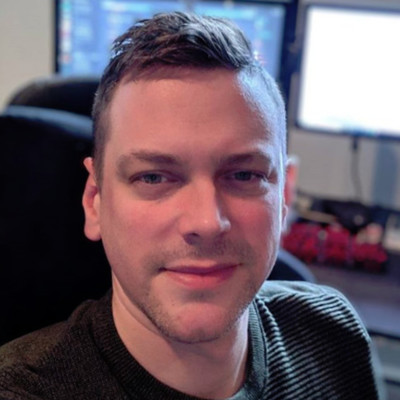
Founder & CMO @ Leadhouse Innovation
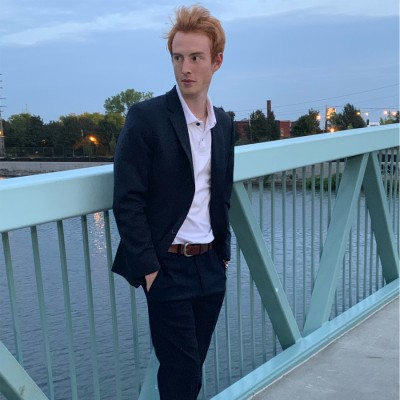
About Kevin Swift
Co-Founder @ Leadhouse Innovation
About Us:
Dark Rhiino Security’s Security Confidential is a weekly Cybersecurity podcast where Host, Manoj Tandon, talks to Infosec and Cybersecurity professionals about the current issues going on in our industry. Guests are able to share their stories about how they began their journey into cybersecurity and connect with our audience. Listeners are able to tune in through Spotify, Apple Podcasts, Google Podcasts, Amazon Music, iHeartRadio, Youtube, LinkedIn, and more.
For inquiries, please email media@darkrhiinosecurity.com
Share and spread the word!
Original podcast listings
Archive source: Original website record. Original wording and artwork retained.