SECURITY CONFIDENTIAL
Security Confidential S16 E8 Stacey Champagne
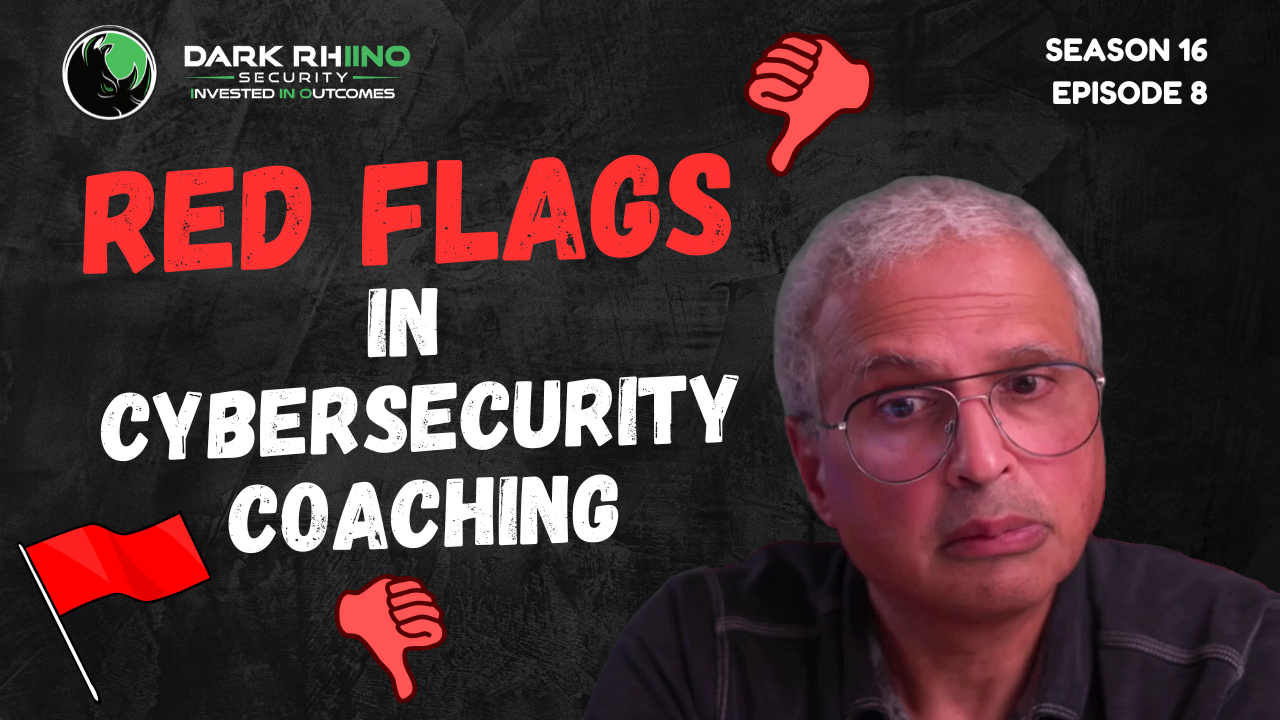
This week on Dark Rhiino Security’s Security Confidential podcast, Host Manoj Tandon talks to Stacey Champagne. Stacey is the Founder & CEO of Hacker in Heels, a community dedicated to advancing women in cybersecurity through coaching, courses, and events. With over a decade of experience leading cybersecurity programs at Fortune 500 companies and startups, she specializes in […]
Video
This week on Dark Rhiino Security’s Security Confidential podcast, Host Manoj Tandon talks to Stacey Champagne. Stacey is the Founder & CEO of Hacker in Heels, a community dedicated to advancing women in cybersecurity through coaching, courses, and events. With over a decade of experience leading cybersecurity programs at Fortune 500 companies and startups, she specializes in insider risk management, security investigations, and program management. She has been recognized as a 2024 SANS “Diversity Champion of the Year” finalist and a 2024 Cybersecurity Woman of the World Top 20 Honoree. She holds multiple industry certifications, including CISSP and GSOM, and earned a Master’s in Security and Resilience Studies.
Red Flags in Cybersecurity Coaching | Security Confidential
Chapter Titles:
00:00 Introduction
02:26 Making cyber make sense
09:50 Why are cyber programs not working?
14:47 How do you motivate folks?
29:38 When should you use a mentor or a coach?
31:26 The difference between a mentor and a coach
34:20 How do you find a great coach?
40:47 Connecting with the Hackers In Heels community
Audio:
Spotify Embed: S16 E08 Red Flags in Cybersecurity Coaching
Important Links:
Transcript
Manoj Tandon: Hello everyone, this is your host, Manoj Tandon. Welcome to another episode of Dark Rhiino Security: Security Confidential. We’re going to have another great guest today, but before I introduce her, I have to remind you: please hit the like and subscribe button. I know you’re probably tired of hearing it, but it helps us out and allows us to bring you great content.
Now, today we’re honored to have Stacey Champagne join us. Stacey, for those of you who may not have run into her, she is all over the place in the world of cybersecurity. She is the founder and CEO of Hacker in Heels, and it’s a community dedicated to advancing women in cybersecurity through coaching, courses, and events. Prior to that, she’s been in the Fortune 500 industry for a long time in various roles in cybersecurity, managing insider risk management, security investigations, and doing program management. She has a ton of experience in the cybersecurity field. She’s been recognized as a 2024 SANS Diversity Champion of the Year finalist and a 2024 Cybersecurity Woman of the World Top honoree. In her spare time, she’s earned many degrees and certifications. We’re honored to have you, Stacy. Thank you for joining us on Security Confidential today.
Stacey Champagne: Thank you for having me. I’m really excited for this conversation.
Manoj Tandon: Hey, thank you. So with that, we all want to know: how did you start in cybersecurity? What were the beginnings of your career? What’s your background here?
Stacey Champagne: Sure. So the short answer is no, I did not start in cybersecurity. It was not the thing that I did when I graduated from my undergrad. In fact, my degree was in graphic design with a minor in business, and I also earned an undergraduate certificate in product innovation. So if you looked just at that one line in my resume, you would think that I was off in design and in the arts. And for a period, I was. I was a Visual Information Specialist for an intelligence community agency.
The way I got into that was—and trust me, this will all make sense once it all comes together—
Manoj Tandon: This is intriguing.
Manoj Tandon: You got our attention.
Stacey Champagne: I met a recruiter at a high school robotics world championship. So I was at the FIRST Robotics Competition world championship. For those who are unfamiliar with it, it’s a program where high school students get six weeks and a kit of parts to build a robot to compete in what could be described as a sport. There are teams, alliances, and a lot of fanfare. It was held at the Georgia Dome—a big deal.
Tons of fun and a really great program for inspiring kids into STEM careers. At that event, this agency was recruiting. I kind of shrugged it off at first and said, “Oh, well, you wouldn’t want me because I’m not going to school for engineering. I’m going for graphic design.” And they were like, “We need all sorts of people.” Which is true—every organization needs people in finance, HR, design, marketing, and more.
So I thought, “Okay, this actually sounds kind of cool. And how much are you going to pay me?” When they said around $70,000 a year, as a high school student in New Hampshire, that got my attention. Everything I did from that point forward was with that goal in mind—and I got it.
I went to the number one public school for graphic design that they recruited from, secured the one internship spot available, and then transitioned into their grad scholar program so I could continue working with them while getting grad school mostly paid for.
That’s where I pivoted into cybersecurity. I realized I didn’t want to do design for 20–30 years. While working there, I was exposed to intelligence reports, cybercrime, and cyberterrorism topics. I found it fascinating and wanted to be part of that world. So I pieced together the opportunity—grad school, career pivot, and financial growth.
Manoj Tandon: 70 grand doesn’t go very far in Northern Virginia.
Stacey Champagne: Exactly. That’s when I made the switch. I earned my Master’s in Security and Resilience Studies with a focus on cyber policy. I could have gone back to the agency, but a Fortune 500 company offered me double the salary and a signing bonus that covered my tuition repayment. So I pivoted again.
That’s a big part of who I am—I don’t get stuck protecting an identity I’ve built. If a better opportunity comes along, I take it. Too many people stick with what’s comfortable instead of taking a chance on something new.
Manoj Tandon: That’s something that can’t really be taught—only experienced.
Stacey Champagne: Exactly. You either push yourself or you don’t.
Manoj Tandon: That brings us to your Fortune 500 work. You mentioned resiliency. We see breaches in the news constantly. Why are cybersecurity programs still failing—even in organizations with massive resources?
Stacey Champagne: I’d attribute it to what I call the “Empathy Protocol”—or rather, the lack of it. These companies have money, technology, and talented people. But that’s not enough.
Cybersecurity requires human connection—with business units, customers, and stakeholders. What’s missing is strong leadership. Leadership is not the most technical person in the room. It’s someone who understands the business, supports people, and bridges gaps.
Too many technical professionals say, “That’s not my job.” But understanding the business should be part of the job.
Manoj Tandon: Isn’t that a difficult shift for technical people?
Stacey Champagne: It is a skill—but it can be learned. These are smart people. If they can learn technical skills, they can learn leadership and communication too. Not everyone needs to be a leader, but everyone should build some of those competencies.
Manoj Tandon: How do you create that environment?
Stacey Champagne: You have to make space for it. That’s hard because security teams are constantly reacting—patching, updating, responding. But if you can make time for technical growth, you can make time for leadership growth too.
It starts with better planning, stronger relationships across the business, and leaders who know how to set boundaries. Many leaders don’t know how to say no, and that creates burnout.
Sometimes, people are simply in the wrong roles. I call it “compassionate realignment”—putting people in positions that actually fit their strengths.
Manoj Tandon: There’s also ego involved. People don’t want to admit they’re not the right fit.
Stacey Champagne: Exactly. We say it’s okay to fail, but in reality, it’s not safe to fail. Look at CISOs—the turnover is huge.
A lot of issues come back to poor planning, unclear expectations, and lack of communication. Organizations say security matters—until it becomes inconvenient.
Manoj Tandon: Can you give an example?
Stacey Champagne: Sure. I saw two teams doing the same work. One team didn’t want to give it up because they feared losing relevance. Instead of talking it through, they duplicated effort and wasted resources.
When they finally had the conversation, they realized the other team was better suited for the work—and it freed them up to focus on higher-value tasks.
A lot of organizations operate in a survival mindset instead of focusing on what’s best for the business.
Manoj Tandon: Sounds like mentoring and coaching could help here. What’s the difference?
Stacey Champagne: Mentoring is about sharing your experience—what worked for you. The mentee decides what to take from that.
Coaching is different. A coach asks questions and helps you find your own answers. You create your own plan, which makes you more likely to follow through.
Manoj Tandon: That’s interesting—I would’ve thought coaching was more directive.
Stacey Champagne: It’s more about mindset and decision-making. You already know your field. Coaching helps you navigate how to grow within it.
Manoj Tandon: When should someone seek a mentor versus a coach?
Stacey Champagne: Mentorship is more passive—great for inspiration. Coaching is active—you need a goal and willingness to take action.
Also, coaching should have an end. The goal is for you to become self-sufficient, not dependent on the coach.
Manoj Tandon: How do you find a good coach?
Stacey Champagne: Look for someone with proper training—like ICF accreditation. Avoid coaches who promise outcomes like guaranteed promotions. Coaching doesn’t work that way.
Also, be cautious of expensive packages with no exit. Some structure is fine, but there should be flexibility.
Manoj Tandon: Great advice. Before we wrap, where can people find you?
Stacey Champagne: The best place is the Hacker in Heels Insiders community. It’s a membership with study groups, networking, and group coaching. It’s a great entry point if you’re curious about coaching.
I also offer “pay what you can” coaching. But I prioritize members of the community because they’ve committed to their growth.
If you join, you’ll get access to me and a network of women supporting each other’s careers.
Manoj Tandon: That sounds fantastic. We’ll include links in the show notes. Keep up the great work—your passion really shows.
Stacey Champagne: Thank you. I love what I do. And I think cybersecurity needs to focus more on relationships and empathy—not just technical skills.
Manoj Tandon: That’s a great place to end. Thank you for being on the show. We’d love to have you back.
Stacey Champagne: Thank you. I’d be happy to come back anytime.
Manoj Tandon: We’ll make it happen. Take care.
Read more about Stacey on her LinkedIn
Learn more about Hackers In Heels
Become a Hacker In Heels Insider
Check out the other episodes in Season 16:
Ep. 0 Jim Love – Company Data on ChatGPT: Why What You Share Could Stay Forever
Ep. 1 Ken Underhill – Breaking Into Cybersecurity: Job Hunting Tips and Ghost Job Realities
Ep. 2 Allie Hunter – The Dark Side of Online Gaming
Ep. 3 Purandar Das and Ken Foster – “Delete My Data” Doesn’t work
Ep. 4 Tammy Klotz – Communicate properly with your team
Ep. 5 Sandra Estok – My Identity was Stolen
Ep. 6 Brett Johnson – Inside the Mind of a Former Cybercriminal
Ep. 7 Darren Mott – “Hackers Aren’t Breaking In—They’re Logging In”
Ep. 8 Stacey Champagne – “Red Flags in Cybersecurity Coaching”
Ep. 9 Craig Taylor – Phishing, Encryption, and Cybersecurity Training
Ep. 10 Christopher Rees – Will AI Change the Way We Learn
About Stacey Champagne

Stacey Champagne is the Founder & CEO of Hacker in Heels, a community dedicated to advancing women in cybersecurity through coaching, courses, and events.
With over a decade of experience leading cybersecurity programs at Fortune 500 companies and startups, she specializes in insider risk management, security investigations, and program management.
She has been recognized as a 2024 SANS “Diversity Champion of the Year” finalist and a 2024 Cybersecurity Woman of the World Top 20 Honoree.
She holds multiple industry certifications, including CISSP and GSOM, and earned a Master’s in Security and Resilience Studies.
About Us:
Dark Rhiino Security’s Security Confidential is a weekly Cybersecurity podcast where Host, Manoj Tandon, talks to Infosec and Cybersecurity professionals about the current issues going on in our industry. Guests are able to share their stories about how they began their journey into cybersecurity and connect with our audience. Listeners are able to tune in through Spotify, Apple Podcasts, Google Podcasts, Amazon Music, iHeartRadio, Youtube, LinkedIn, and more.
For inquiries, please email media@darkrhiinosecurity.com
Share and spread the word!
Original podcast listings
Archive source: Original website record. Original wording and artwork retained.