SECURITY CONFIDENTIAL
Security Confidential S13 E9 Chandra Pandey
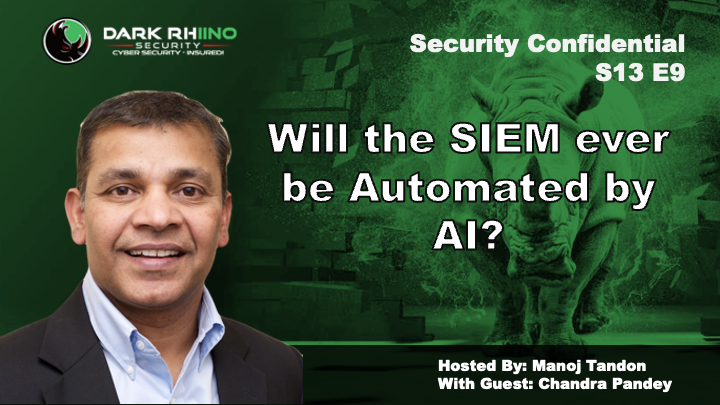
This week on Dark Rhiino Security’s Security Confidential podcast, Host Manoj Tandon talks to Chandra Pandey. Chandra is an expert with 20+ years of experience in the cybersecurity and networking domain. Chandra has been associated with multiple disruptive innovations for cybersecurity and networking domains. Current innovations at Seceon is already used by 6000+ customers around the globe […]
Video
This week on Dark Rhiino Security’s Security Confidential podcast, Host Manoj Tandon talks to Chandra Pandey. Chandra is an expert with 20+ years of experience in the cybersecurity and networking domain. Chandra has been associated with multiple disruptive innovations for cybersecurity and networking domains. Current innovations at Seceon is already used by 6000+ customers around the globe and make industry’s best cybersecurity affordable to organizations of any size and eliminate the needs for customers to buy 15+ products like SIEM, SOAR, NBAD, UEBA, MDR, Cloud Security, Container Security, IDS etc.
Will the SIEM ever be Automated by AI? | Security Confidential
Chapter Titles:
00:00 Introduction
00:16 Our Guest
06:57 The Culture at Seceon
09:32 The culture one comes from or the culture that one finds oneself in, What’s more important?
11:23 Transitioning from a technical engineer to a business leader
12:45 Adapting to changes in the industry
13:34 How to get the most out of Ai
21:46 Will we ever be able to get rid of the human in the SOC and have the SIEM be automated by AI?
23:40 Why develop a SIEM?
27:35 Motivation from Chandra
Audio:
Spotify Embed: S13 E9 Will the SIEM ever be Automated by AI?
Important Links:
Transcript
Manoj Tandon (00:01.464)
Hello everyone, this is your host, Manoj Tandon. Welcome to another episode of Dark Rhino Security, Security Confidential. Today we have an awesome guest joining us, Mr. Chandra Shekharpande. Chandra joins us from Massachusetts. He is the CEO of Secchian. He’s been in the cybersecurity space for a very long time. He has 20 plus years of experience with many different organizations ranging from IBM to Lucent to…Juniper Networks, has an amazing background, several patents to his name, has been a disruptive innovator in the industry. And we’re just honored to have him here. And Jandar, thank you so much for joining us on the show today. We are eager to hear a little bit about your story.
Chandra S. Pandey (00:52.222)
Yeah, thank you. Thank you, Manoj. It’s a great opportunity for me to join you. I have known you for a long period of time, and this is the first time, actually, I have an opportunity to join you on the, like, in this show. I know I watch your show. I watch your episodes. Not all of them, but quite a few of them, I have watched them. So thanks for giving me the opportunity to be part of this session today, sir.
Manoj Tandon (01:19.108)
That’s a vote of confidence for someone like you to say that. Thank you so much. We’re honored. So, you know, we have so many entrepreneurs that come on this show, but one thing that is so unique, you know, when you were able to make this appearance is that we look at when you look at the Indian culture, the Indian subcontinent, so much of people from India for understandable reasons, it’s a culture that favors job security. It’s about having security, being financially secure, getting a good education. That’s the focus. And it’s just not India. Even I would say a lot of Asian cultures probably fall into that category. But you grew up in that culture and you said, no, you know what?
I am going to be, I’m going to break out of that and I’m going to take a risk. So how did that happen? Like, and what motivated like you to do that?
Chandra S. Pandey (02:27.29)
Yeah, I think that’s a really great question. And we see every day around us over the last 30 plus years. I’ll say one of the biggest influence on probably on my career came from because the first job I worked was a company called C-DOT, which was founded by a gentleman.
He had a big influence in that to founding that organization in India. He worked over here in US and he went back there and he helped the government launch to kind of bring a revolution to the telecom sector in India. So I was working over there and they mostly picked up the young kids and then young kids were supposed to do the research.
and create a telecom equipment, which it was switching our transmission equipment and all that. And that very few senior people were there, mostly young people were part of it. So when you go in there, it was like you were doing the things from the scratch. There was nothing existed. It was a cutting edge research we were doing, especially when I was working at that time, it’s like a…
Manoj Tandon (03:32.388)
Okay.
Chandra S. Pandey (03:46.498)
SDH and all that, everywhere it’s like a new thing was happening. Sonnet in the US people used to call Sonnet. So I had a person to do AC, FPGA and do those kind of work. And so it got it like, hey, you can do anything you want. You know, that kind of thing came into there. And then when I came to US, I had a person to work into. I came from the electronics engineering background. So I was working on.
Manoj Tandon (04:13.112)
Right.
Chandra S. Pandey (04:15.77)
like those ASIC FPGA and processor designs and then board designs and all that in there, making an electronic system there. And then after being here for a few years, probably I had worked for, I’ll say, seven, eight years, I got the opportunity that in 2000 to come and be part of the Lushen.
lead a big project over there with a lot of very talented engineers. I’ll say it’s like it was fun to have that team working with me and you learn from your team. So when we are learning, it was like, hey, we can do anything because it’s like a cutting edge you are working with. And now that confidence comes in that, you know what, we can do anything. And then there was a startup called Internet Photonics.
Manoj Tandon (04:54.482)
Oh yeah.
Chandra S. Pandey (05:11.554)
That came after I had a few other job offer to be CTO and all that in there, but I ended up joining that team. And there we had an opportunity to do something which kind of changed the way transmission is like works, you know, it’s like how you do all the, the transport of the data sets, you know, so that kind of changed the whole spectrum you went from the, like having your
Manoj Tandon (05:33.998)
Yep.
Chandra S. Pandey (05:39.946)
sonnet interfaces and pass and all that to creating ODU and OTU to make a huge change into the infrastructure and the thing is if you look into all of these was giving me opportunity to be at the cutting edge of technology which is changing around the globe It wasn’t like, you know, so you are kind of coming up with this something first time
Manoj Tandon (06:00.974)
Ready?
Chandra S. Pandey (06:04.086)
And that kind of gives you a confidence that, hey, you can do anything you want. It’s like if you want to look at the problem, if you have your way of doing the innovative solution, there is a kind of opportunity out there to make an impact into the society. So those drove into that confidence that, hey, look, any job you want, you can get to find a job in there. But if you can go and create something,
and have that create thousands of jobs around it, that was like a big satisfying kind of like opportunity. So I was in that first startup, it was bought by CNI, and then I went to Juniper. And I’ll say Juniper also gave me a fundamental like sift into thinking process in there, because there I ended up leading a solution architecture and engineering team, which was…
Manoj Tandon (07:00.132)
Yep.
Chandra S. Pandey (07:00.858)
looking into all the product portfolio and the solutions, which are offered to all of the partners, whether they were service provider or enterprise. So I had opportunity to not only look at, you know, it’s like routing, switching, cyber security, especially at the cyber security at that time, you are talking about the firewalls and all that, and VPN and SSL VPN and all that. So it gave me a pretty big breadth of the like,
portfolio and then I had opportunity to have a lot of smart people in my team. So you learn from those people. And I was pretty shocked that all the customers, top 50 plus customers around the globe, they will rely on our team to drive them into what solutions they want to go and build from the next generation point of view and how the everything will work together. So.
That was a phenomenal opportunity for me to learn from.
Manoj Tandon (08:01.312)
Now, Chandra, if I recall, Juniper Network stock had a meteoric rise, right? It did really, really well for quite some time. I hope you folks got a chance to participate in that success of the company.
Chandra S. Pandey (08:12.63)
Yeah.
Chandra S. Pandey (08:21.118)
Yeah, so that’s a great question. So see, June, but I was not as a very early on guy, but I joined 2005. And I’ll say I was definitely lucky, first of all, that I got a chance to lead the solution architecture and engineering team. And then also, if you remember that around that when the
the challenge, the financial crisis happened and all that in there. 2008, 2009, a lot of things were going south. Juniper has done a pretty phenomenal job in investing in the R&D, which gives us opportunity for the stock to kind of like do really well during those time frame in there and everybody who was at the Juniper, they did really well. There was a very good CEO, I’ll tell you, Juniper had Scott.
Manoj Tandon (08:49.453)
Yep.
Yep.
Chandra S. Pandey (09:14.002)
was the CEO and I think he was such an authentic person, it’s like with the high integrity. Some of the things he had said, any engineers can go and meet him, forget about you don’t have to be a senior person in the company because he was such a simple person to meet. And you learn from the people around, you know, CEO and he was one of those person that, I’m pretty sure anybody who was in the Juniper into those days when he was a CEO,
will say that he is a great person. You can have a discussion with him in the cafeteria, in the hallways, anywhere you want. He was that kind of easily accessible person out there. So Junpur definitely was a great company. And
Manoj Tandon (09:59.196)
Now, so in mentioning that, I have to ask is, is that a culture that you’ve adopted at Secchian as well?
Chandra S. Pandey (10:05.962)
Yeah, so you see exactly one thing I’ll say. At the Secchian, a lot of things is like I had the opportunity to learn, because I said all the way from my first job to I was pretty lucky. Most of the organization, we had a very open culture, except for some which were like it was such a big company. It was not that kind of open. But most of the time, I’ll say the
From my first company to the Juniper to even the company, we had the first startup, Internet Photonics. It was pretty open culture. And open culture, what does it mean? It says everybody knew what is going on inside the company. Everybody was kind of like leader of making the decision and never being hold back like, hey, you know, it’s like you are not a decision maker and all that in there.
So that kind of gives people a lot of freedom, as well as, you know, it’s like accountability and responsibility to grow up into the leader, just to give you an idea. And it’s like, I do all-hand meetings on every Friday, and those meetings, everybody knows exactly what is going on in the organization. Nothing is kind of like, you know, behind the closed doors and all that. So…
People know it, people know the good things, people know the challenges, what are the things we have to kind of work together to overcome, and everybody kind of contributes the idea, then we execute on it. Because look, at the end, Mnodji, you pointed out that, look, we are not a very big company in the cybersecurity point of view. If you look into that, a company which have thousands and multiple thousand people in there.
Manoj Tandon (11:48.712)
Oh, we’re not a big company either, so, but you’re bigger than us, so.
Chandra S. Pandey (11:53.074)
Yeah, so we have maybe 100 plus people in our team. But if you look into the kind of the innovation we do, a lot of companies, even with the 1,000 people, they cannot do it. And that is only possible by working in the big organization as well as the small one. What you end up learning is, if you want to make innovation,
What you have to do is you have to empower your people and does not have a lot of if and then and all that in there. You have to go in and say, you know what? Let’s have a discussion. We can have a lot of open things in there. But once we come to the conclusion, let’s go and execute it. So those things, it’s like if you look into the platform we have, I know that your team has a
chance to experience it, that kind of a platform is very hard to do in the industry. A lot of people, when they hear about it, they say, oh, same possible, and so how you can have all of these things into the single platform out there. And it just comes with the approach that the approach we took. And a lot of time, you get discouragement that, hey, you know, this is a 10 product in one. Why you want to do it?
It’s not going to be possible to do it. But being in that opportunity I had throughout my career, that opportunity to innovate, learn. And you see, nothing is easy because it does not happen just like that. You have to put a lot of efforts. You get some setback as well in there. But as long as we have a willingness to overcome those,
things always kind of like happens, you know, you will always overcome any challenge until unless you are totally Unreasonable or you have not have enough of the background to make those kind of a decisions, you know
Manoj Tandon (14:00.072)
So then I have to ask, when you look at innovation and entrepreneurship, what is more important, the culture one comes from or the culture that one finds themselves in?
Chandra S. Pandey (14:17.974)
Yeah, I will say it’s like culture one kind of like you define, you know, so you have to define the culture and culture you also have to come from has a kind of look, anything you grew up with, you know, you always live with that as well in there because there is a certain things, you know, it’s like it’s hardcore into you, you know, it’s like so if you had like, you know, caring kind of a culture you grew up in there, you grew up in the family or community.
So that caring part always goes with you, whether it’s like you form a company or you’re part of a company, company becomes your family, that’s right. So you always are looking to like, it’s like a group of people. And you look, it’s like since we started, probably it’s like there are people who are there with us, they may not be there with us, but they are still part of the same family. And they, if you go in and ask, they always…
kind of feel that they are part of the family. And then we also welcome them, because we are part of their family as well. They are part of the same family there, what they have brought on the table and all that in there for the people around them. So it’s always, you kind of do that, but one thing is always I’ll say, any organizations you have, an organization is like, you know, a company is a…
kind of like living and breathing kind of things in there. So you always have to keep in mind that, you know, it’s like, hey, organization is not just like something you kind of pass through, it’s living and breathing and people make those relationships which last throughout their life. So you always have to keep that in mind. And, you know, it’s like, look, we always learn from the people as well, because one thing I always tell my team that, look,
You might be here for a longer period of time. Somebody may walk through the door. One of the things is, like, we have to always keep in mind that we have a set of values. We kind of like, you know, you mentioned about Juniper. Now I’ll share with you. Juniper used to have a set of the values, that these are the values we live in, kind of like by that. And those were written out there.
Chandra S. Pandey (16:39.73)
And then people live with that. And same thing we have into the Secchian, that hey, these are the value. Everybody should have respect for everyone else. Even if somebody walked through the door the first day, you should respect them, respect their thought and opinion, listen to them, and learn from that. You should not assume that, oh, I know everything, and they know kind of like very little and all that, because some of the things they can contribute and they can bring on the table.
Manoj Tandon (17:02.681)
Yeah.
Chandra S. Pandey (17:08.574)
which we may not have ever thought about it. So always be willing to not only just respect, but learn from each other as well. And then, you know, it’s like the good things start happening around the organization anyway, you know.
Manoj Tandon (17:25.386)
Well, it’s a very, uh,
inclusive and positive approach. And it’s interesting to hear you to describe it. And especially someone like as you mentioned, you have a very strong electronics engineering background. So one would never have, you know, there’s a lot of biases out there and people typically wouldn’t guess that someone with a stronger background as you had on the technical side would become a business leader, but.
I have to ask in that regard, was there anything in particular that you want to share that in a challenge in transitioning from being a technical engineer to a business leader, what was that transition like for you?
Chandra S. Pandey (18:15.882)
Yeah, you see, you know, one thing, Pinodji, I’ll say that I’m not sure whether I really are one side or other side. Clearly, you can mark it. But at the end, you know, it’s like I have to make sure that here we are doing the things which takes care of our team. That’s right. Because at the end, we have a team. Team has to kind of like on and feed their family, their kind of the people around them and their
take care of it. So we have to make money in the process. That’s right. One of the things is I’ll say, you know, it’s like I’m still pretty technical. So many things if you ask into is like my team will discuss with me that this is what we are doing and what your thought process is. They involve me into the decision making process like every month that what we are going to do. But at the same time, you know, if you look into
With the business point of view, what happened is, Manojji, when like, why Sekhiyan? You know, that will be the one of the questions, like why Sekhiyan? And, yes.
Manoj Tandon (19:24.188)
Yeah. Why a sim? And why not? Why not? Why not a communications? I mean, you could have started a company today that would be running all the 5G networks, but
Chandra S. Pandey (19:36.37)
Yeah, exactly, exactly. So if you look into what happened is when I was in Juniper, and then we used to see that, you know, how the people kind of like, you know, does not have a lot of understanding about the, you know, especially about the firewall. And then any breaches were happening at that time. It was like always there was a, like a read was going on that no breach has happened, your data is out there. Some of the…
government entities are finding it, reporting it, or sometimes it is in the dark web, and so on and so forth. And most of the time, people will, at that time, talk where it takes 200, 300 days to find your data, and so on and so forth. So coming from the background, the opportunity I had to see everything together, whether from the enterprise side, even applications, as well as the networking.
firewalls and all that, it gave me an opportunity that, hey, if we take all the telemetry together and we are able to kind of create a platform where we can put the context and situational awareness, and luckily what was happening in the industry is a lot of innovation which has happened into the silicon side. So whether it is SSD coming into the place to make the data available.
to bring the context and situational awareness at pretty fast level quickly. Memory interfaces and the memory sizes growing up significantly. So you can put terabytes of data, or sometimes hundreds of terabytes of the data with SSD and memory together, close to kind of like a real-time decision-making process. And the CPU advances to give you that capability. It was like, hey, you know what? If we want to solve this problem,
Manoj Tandon (21:06.871)
Yep.
Manoj Tandon (21:18.776)
Yep.
Chandra S. Pandey (21:31.63)
there is a kind of a good set of those silicon innovation has happened in there, which we can give you capability. And then also, this big, fast data streaming platform, they have come into the fusion. So all of a sudden, that analytics capability has come there. Electronics has made it possible to now do that context situational awareness, able to do machine learning and put that.
Manoj Tandon (21:57.836)
Yeah.
Chandra S. Pandey (22:01.07)
Domain-specific AI. These days, a lot of people will talk about AI. This AI today is like what used to be NLP. Now that has evolved into regenerative AI in there. That’s what you are talking about, the LLMs and all that in there. And that will see right now you have big hype in there. The hype.
Manoj Tandon (22:19.981)
Yeah.
Chandra S. Pandey (22:24.822)
will come down significantly, but what will happen is some good things is going to come out of that as well. But that is not something which that LLM is basically is like, you know, you can somebody can feed the wrong data and you can have like a lot of like, you know, it’s like useless information come out. So I’ll give you an example that what we did is
Manoj Tandon (22:46.892)
Please, you’re saying AI can give useless information? People won’t believe that, but thank you.
Chandra S. Pandey (22:54.45)
Yeah, look, you can have hallucination coming out of the AI, like especially regenerative AI in there. Because the context is really important. And if you see, if you want to find a specific domain-related problem, then that regenerative AI is not into that. That you have to feed a lot of domain-specific kind of like intelligence.
Manoj Tandon (23:19.52)
Yes.
Chandra S. Pandey (23:19.846)
And you are trying to solve a problem which has to be very, very space-fixed. So just to give you an idea, where the regenerative AI will play a big role in there, because it’s like one thing is like you can feed a lot of data and give some generic Q&A and all that in there so that something is like somebody has fed in there. Because at the end, it has to read the data and derive the result out of that. And that’s the problem.
how you make sure that the data you are giving it to read is accurate data. If you just open it to the public, there is a lot of conflicting information out there. So how will make that decisions? And then also, if you do not bound it, so that’s where you have parameterized it, bound it. So give the answer from out of the data you are kind of like asking it to learn from.
Manoj Tandon (23:58.617)
Sure.
Chandra S. Pandey (24:15.874)
So it can have a context, but you can say, no, no. I still need answer coming out of the data I gave you. That’s right. Otherwise, you will get the answer, which might be not what you were kind of like trying to get out of it as well. So just to give you an idea, you know, it’s like we have been doing AI for like nine years since we started our company in there, because that one is a domain specific AI to bring the.
situational awareness and the context. So that one you cannot replace with the LLM and all that in that regenerative AI. What you can do where the regenerative AI kind of gives you a lot of meaningful things you can do. If you have a good size infrastructure and all that, you can feed your own set of the knowledge bases. And based on that knowledge base in there, now you are able to
get a answers out of it. Sometimes even you generate the questions and the feed the answer yourself in there but it’s a lot of work also. That is not a free because that requires you to do also work because you see as a human what we do is we understand a lot of things by drawing a picture. We draw a picture and that picture can explain a lot of things very quickly that’s right because you can
Manoj Tandon (25:19.042)
Yep.
Chandra S. Pandey (25:39.758)
create a workflow and say, OK, this is what it is. And human can understand it quickly and say, I got it. I got it. Now, the challenge is with the LLM, you can’t do that. So if you had something drawn in a picture, now somebody has to go in and write like 20 page explanation in a very nice way and all that. And if you have an answer coming out of that, even the reader will say, ah, forget it. I, ah.
I don’t have a time to read that five pages of answers in here. I need something quick, you know? So see, a lot of it has its own advantage, and it has its own challenges still, a long way to go. And definitely, it will add a lot of value, because wherever you have a rich set of the data, and the data which is authentic data, you cannot just kind of give all the data out there, because a lot of conflicting data
Confuse it, it will hallucinate, it will give you information which will make you kind of shoot on your foot itself. So you want to be always careful to bound the problem and make an answer come out of what you wanted to kind of learn from and give you the answer, you know.
Manoj Tandon (26:55.3)
Well, so it sounds like we’re still a long ways away from
having the average person just program their own AI engine. Maybe in another 10 years we’ll get there, but as you have described it and you’ve done it very succinctly, that we have to bound the problem, we gotta have the right data set, we have to parameterize it, and then and then only are you gonna start seeing meaningful results that will come out of the system. Otherwise you’ll get all kinds of ad hoc things happen. That…
Chandra S. Pandey (27:30.314)
Yeah, exactly. And you see the thing is, one thing I’ll say, Vinodji, what happens is, as a human, we are always sometimes want to see, it’s like when the, let’s see these AIs came in out there, there was a lot of demos was going on and it can kind of, you a human can have a communications with the, it’s like some of those engines.
Manoj Tandon (27:31.005)
are not necessarily accurate. So.
Chandra S. Pandey (27:59.77)
and all that in there. And then you can ask the question, get the answer. See, what ended up happening is you put something and it gives you answer you wanted to see. You become very happy that, oh, it’s kind of phenomenal in there. Then you kind of keep on prompting it for a few more things in there. And you start seeing that, hey, now you are getting answer which is not accurate there.
And look, there are companies which are spending billions of dollars, and they know very well that it’s a lot of hallucination happens in there. And the biggest challenge you have, it’s like, look, this thing is really powerful, but these powerful things require you to have a lot of human work to be done to feed that kind of knowledge. And
And if you think that, you know, it’s like, I will let it just go and get the knowledge from the internet and all that. You saw that a lot of those where like legal cases are going on, I think it’s like a lot of media, the houses are saying that, hey, they are taking our proprietary information and trying to give the answers out of our work and all that in there.
Manoj Tandon (29:03.373)
Yeah.
Chandra S. Pandey (29:17.334)
And there is a lot of issues like that is going to happen. Because if it is reading from public sources, you see somebody stole that engine that, hey, these sources are reliable sources, and you should pick the data from there. There are other sources which are not reliable, so don’t read it. So it is reading for that. But who owns that work? Now, it is like you saw that a lot of legal cases are happening out there.
Manoj Tandon (29:43.624)
Yeah, but they put it in the public domain as well, right? So they… If it was…
Chandra S. Pandey (29:49.503)
Yeah, exactly. So it’s like those things are going to be kind of questionable. But at the same time, a human is also putting that work, that hey, which one is a reliable source, which one is not. And sometimes even the source might be an opinion, not the fact. That’s right. So those ones also you have to care about. But you see, this is like an engine. Whatever you put into there, just make sure you don’t pick
put the conflicting information, and then it will give you quickly answer out of that instead of you going and searching through your 500 pages book or 5,000 pages book to go to that particular page. Now this is giving you answer very quickly. And some meaningful correlations are there, but not something which you can completely say that, ah, that’s kind of going to do everything for us. That’s going to take long period of time.
And it may not be done as well. I’ll be the first one to say that. You know, Vinod Ji. Yeah.
Manoj Tandon (30:49.444)
So I have a question here is from what you have described with all the human effort going into it and specifically in regards to a SIM, do you ever see a future where we can get rid of the human in the sock and just have the SIM be totally automated just on AI?
Chandra S. Pandey (31:13.826)
Yeah, I think that’s a great question. And I will say that one word answer is no. And the reason it is no, I’ll say, is like you can minimize, you can make it very efficient and all that in there. So where you had to put like 10 people, you might have to put one people there in there. Because all the context and all that has been brought in. See, again, when we put the AI and ML with the context,
Manoj Tandon (31:20.921)
Yeah.
Chandra S. Pandey (31:43.254)
We never have the AI make the full decision because there is a lot of more data. There are certain things where ML and AI then have to tell you that this is a bad thing in there. The context was just like, OK, I’m looking into something right now in this context what has been seen in the past. And the past can be multiple years down to the multiple hours to multiple days, multiple months.
that if a human has to do all that work, because you see that you asked that great question and you were talking about it, if a human has to look into the billions of data points to come out with the decision, that will be very tiring and time consuming job and all that. Yeah, so that’s why you basically let the machine do that work in there, but it’s still there are, because you see.
Manoj Tandon (32:21.963)
Yeah, it’ll be very unreliable.
Chandra S. Pandey (32:32.566)
this organization you are trying to do the security, whether it’s a SIMS or your UBI or XDR, EDR, anything you are looking into, these are living and breathing space. And the things are not like, you know, these are not a machine that the things which happen different from one day to another day, there are certain exceptions are happening as well in there. There are…
reports are getting generated, there are new people coming and sometimes new people showing up is a valid thing and sometimes new people or new activities are happening is something which needs to be checked whether this is right or wrong. So machine can have some data you can have it yeah this is something not relevant or this is something is like relevant but it’s still.
you will need, you remember that when the people talk about, you know, any of these framework, we have been talking that hey, there is a processes involved and then there are people have to, sometimes you have to validate. And if you don’t have that validation, you might make a decision, which might be like, you know, not accurate, you know, so that’s why it is really critical that not only you kind of like say that hey,
machine will completely replace. Machine will minimize it. AI will kind of like get to the point where you are not looking to go through all the data by yourself, but you still need like a human to kind of like make a decision. And it may not be all the decision. There are certain decisions you want to kind of like take where you want human to be involved.
Manoj Tandon (34:21.56)
So, you know, on that, I have to ask you again, taking a step back, why develop a SIM? Like there’s so many out there. When you started this company and cybersecurity is such a big field, why a SIM? And how do you differentiate? How do you differentiate yourself in that?
Chandra S. Pandey (34:42.058)
Yeah, I agree. Yeah, so you see, this is a really interesting question because when we started Sekhiyan, we did not even think about the same or Soor. Soor was not even a name at that time. Yuba was not a name. So what we started with is that, hey, we want to take all these.
Manoj Tandon (34:59.94)
Okay.
Chandra S. Pandey (35:05.774)
telemetry, whether it’s coming from your host or applications or processes, identities in there or endpoint, bring it all together, whether it’s like on-prem cloud remote access, it didn’t matter. Bring it all together and add a kind of a context and situational awareness. And there are certain things which is no-no in there. Somebody is kind of have RDP open and then to the public, or you might have a.
you know, it’s like scanning going on and there certain things does not make sense and on that. So whole thing was is like, hey, we wanted to create a threat management platform, which takes everything put into the context and situational awareness and then surface the threat before it is too late. So if somebody’s compromised credential is happening, that credential is getting used to do some suspicious activity.
some malicious activities are happening, you are all detecting that and putting it into a story, in the single story that where a human does not have to do all that work. So you proactively detect a threat into the early steps and stages, and then take an action to also eliminate, contain the threat. One of the biggest thing, if you remember, SOAR came in later on, but we started talking about eliminating, containing the threat.
in the Secchian in 2015. And it was because the background we came from that you remember mentioned about networking background. So we know that, hey, if I know that, hey, there is some malicious activity, some actors are outside try to do, or they have already made a home and they are beginning over there or connecting over there, let’s cut it off on the firewall. Let’s cut it off from your identity management system. If you had a knack, let it cut off of the knack. Or if it was an endpoint,
just apply a policy on the firewall on the endpoint to just quarantine it and still control it so that it cannot, like, go everywhere there. So having that, then kind of coming from the network side, it drove us to, like, hey, do, we call it, we always call it elimination containment of the threat. SOAR was not even a name given. SOAR came much more later on. People came up with that. And then also coming from the network side,
Manoj Tandon (37:21.825)
Right.
Chandra S. Pandey (37:27.698)
One of the other things what we did is we said, you know what? You have this NDR. You know, it’s like people call it NDR. We took the flows and say, you know what? We do not want to just take flows from taking that span port, because I can take a flow, S-flow, net flow, J-flow, C-flow, whatever, and complete organization come alive. That nothing is going to be hidden from us. That’s right. And a lot of flows might be even duplicate. We will be able to look into DDoP and all that in there. So.
Manoj Tandon (37:49.099)
Mm.
Chandra S. Pandey (37:57.202)
Even if you cannot get a log, still we are watching the whole organization. So the whole company we started with that, hey, we will have a proactive threat detection, containment elimination, and you meet any compliance requirement you want. And then as we started going through, the people said, huh, you guys do SIM, you guys do Yuba, you guys do NDR, you guys do Shor, you have a threat intelligence. So all of a sudden, it started looking like, hey,
you have collapsed like 20 different cyber security stack into the single platform, but we did not start it with the same. It was the other people who started saying that, oh, you guys do all these things in there. So I can replace my same, I can replace my NDR, I can replace my Azure, or any other things out there. So if you look into that, that’s the way we got into this business.
Manoj Tandon (38:52.684)
Wow. So your vision was originally something you were looking at a threat detection, elimination, awareness engine. I’m oversimplifying it. And the market morphed it into a sim, essentially.
Chandra S. Pandey (39:11.018)
Yeah, exactly. If you look into today, I’ll tell you something very interesting. So last week, I was sitting down with one of our customers. And their SOC leader, he pulls me out from the event. And he sat down with me. And he said, Chandra, I want to tell you a story. I said, what happened? He said, look, in the last month or so, we have thrusted like a $1 million
seven, eight ransomware attack, you know, and all the different actor groups and all that he was talking about. And he said, let me tell you one story. One story we had with a banking customer. Banking customer at 4 p.m. in the evening, we saw that hey, there is ransomware. So we have something is potential ransomware attack in progress kind of a lot in there. So they saw that.
he looked at it, his team kind of said that, hey, what we should do, they call the customer and customer said, man, IT director at the bank and this happened in the US. He said that, look, I understand what you are talking, tell me what we can do. So they said, you know what, we want you to kind of like, you know, disable certain things. So he said, you know, look, I cannot do that because today’s…
payroll processing day and we are back into many of those people who get paid from our system. So there will be thousands of people impacted. So I don’t want to do all that, you know. And they saw that, you know, there was a data of some headaches filtration has started. They were at 6 p.m. with them and say, okay, let’s limit certain things. Do you have any, we don’t see you do any backup over here where there’s some data we are seeing movement are happening.
The whole story was building that, hey, A has happened, B has happened, new credential created, you have some discovery happened, some data is being collected, and all that in there. Now the data, some of the data is being exfiltrated. And they say, OK, we want to shut it down. So they said, if you feel that based on everything, because we have all the NDR functionality as well, so even if they didn’t have all the data, they can see that.
Manoj Tandon (41:11.864)
Yeah.
Chandra S. Pandey (41:30.334)
It’s like, hey, you have never gone there. You are going to someplace. So they went and applied the policy. But they said that at 8 PM, that guys, it’s like we want to do. So they talked with the president of the bank. And he said, man, look, I don’t want to do this action, because there are still quite a few payrolls will be run through the night and all that. So what they did is they said, OK, let’s apply the policy. They stopped the exfiltrations of the data.
And they also, the same company, bank has two more service provider. And they call that, IT director and his team call those one that, hey, we have been reported that we have a ransomware attack in progress. Do you guys see anything? And they said, no, wow, there’s nothing happening. Don’t worry about it. And these guys kind of like said, no, you have something serious here, man. You know, it’s like.
Manoj Tandon (42:27.651)
Yeah.
Chandra S. Pandey (42:28.442)
And they saw that. Look into the alert. You know what is happening. So the president said that let’s kind of shut down everything. But then one main server lit it up. But you have shut down the exfiltration. So that’s what it is. They come in the morning, and there was a note. That hey, it’s like in front of the, like now they see the note on that, that hey, you have been done this and that. But fortunately, they had monitored everything. So what the data has gone.
And there was not much has gone out there. So that president said that, look, call that guy who has called yesterday night. And they had a discussion. They thanked him for everything. They kind of do the restore from their backup. And they got up and running. So they said that even just wipe out and restore everything. And they did that. And
They thanked them and then basically they said that, hey, this was the only effective service out there and nothing else in there. They still kind of went in to clean it out, that, hey, what has gone out there? So they initiated their process. But they said that, hey, if we have listened to you, nothing would have gone out. You know, it’s like, so that customer, the trust in them, and the thankfulness they had for them, that, hey, you saved us from the disaster.
where not only we had a cost of serious damage, but also how much service could have been down as well, if we have not stopped that exfiltrations and other kind of like, what do you call it, spread into the network. Yeah.
Manoj Tandon (43:59.292)
And
Manoj Tandon (44:09.592)
Yeah, it’s lateral movement. And, you know, these are the kinds of things that we looked at and I wanna make it very well known to our audience that we actually do business with you and you are our SIM provider in our sock. And it’s been very effective. But these are real stories. And…
It’s amazing that the technology has come this far because it used to be that we would have to, we would probably have triple the number of people in our sock in a very traditional setup, if you will. But now the technology has come to where the automations reduce that amount.
Manoj Tandon (45:01.408)
So, Chandar, we’re almost at the hour. I wanted to make sure you got a chance to also plug anything you wanted to.
Chandra S. Pandey (45:10.114)
You know, it’s like one thing, before we started the session, you were asking about, you know, it’s like culture, and then, you know, doing the entrepreneurship and all that in there. I said, definitely, it’s like I was lucky that I had a chance to work in some organizations around the people. But at the same time, you know, it’s like I’ll say that, you know, definitely a lot of we grew up in a culture where
job safety and kind of like was a critical part of it. So taking some of those risks are one of the kind of things you always think that whether people will take it or not. And I’ll just give an example of my kids, you know, it’s like I always, both of them, they work in the high tech industry and all that. But one thing we always discuss, that I did not have that luxury, but some of the kids who grew up over here.
especially they have an opportunity to not only do a job, but also have like an opportunity to create jobs for thousands of people, you know, because they are smart, you know, getting through the college over here and getting a, you know, it’s like a degree is not easy in the US. I can tell you getting through those.
High school STEM program makes it very difficult for the kids to go through those STEM program. And then getting the engineering degree for here is not easy. So those kids are super smart, you know, it’s like, and they have a lot of capability and they have like a opportunity to create a lot of innovative company. And it happens in the U.S. So I’ll say definitely.
They have opportunities. And I always say that if you just do the job, you are doing good for you and your family and a few people around you. But if you do your own company and make it successful, it means like it’s always if you put the efforts together, and there is a good chance of being successful out there, sometimes you might have some challenges and all that. But most of the time, if you keep on trying, you’ll succeed anyway. So.
Manoj Tandon (47:30.785)
Yep.
Chandra S. Pandey (47:32.018)
My kind of like always advice to the children is like, hey, do something good for not for just for yourself, but the people around you and community around you and create thousands of job. And that is the biggest impact you can make in society. If you can do it, that is something is like very honorable. It’s not always about making the money, but it’s like, you know, always.
Manoj Tandon (47:54.804)
And
Chandra S. Pandey (47:59.734)
Doing something for the people around you and the society is a big, big kind of satisfying things. Because you know, money and all that, you know, it’s like, I don’t know what you can have a lot of money, what you will do with it. But sometimes if you had the money and you can create opportunity for thousands of people around you, that is some big satisfying things in anybody’s life, you know.
Manoj Tandon (48:24.916)
Yeah, you know, we had a gentleman, Matt Brown, on our show. He was the last guest before you or one before that. I, sorry, I drew a blank with it, but he he’s interviewed some of the most successful entrepreneurs in the world. And one of the things he pointed out was and you’re making that point that
People who are successful often, it’s not about the money. It’s about being involved with the cause bigger than they are and giving an output that is not centered on them, but is for the betterment of humanity in its larger context. And I guess that’s why you’ve been so successful.
Chandra S. Pandey (49:13.29)
Yeah, I will not say successful and all that. This long term will tell it. But one thing I’ll say, Manojji, you said something very powerful there, that making impact for the society. And one thing I’ll say that when we started Sakyan, the goal was that, and it’s always going to remain, I always talk about making the comprehensive SAP.
cybersecurity affordable for the organization of any size. And that goal we have stuck with. I’ll tell you that today morning I was having a discussion with somebody. Somebody was interviewing with us from one very big company and then I asked them like how you came to know about Secchia and you know it’s like one thing was very interesting. He said you know we are told in our
Sekian is on the table and customer understand what Sekian does, just walk away from those ones in there because most of the time Sekian is like, you know, what they bring in the table we cannot match and all that. And they are the company which is affordable for even the smallest of the company to the largest of company can get a better ROI on it.
And I was pretty surprised whether I should take it a negative or positive. But one of the my team member, he was on the call as well. And he said, Chandra, that is extremely positive things. He said, you know, that his company’s leadership is telling that if you hear Sekhiyanis on the table, just run away from it, you know, because we’ll never win it.
Manoj Tandon (50:53.284)
Well, then you know, you’re going to be successful because with statements like that, if that continues, you guys are going to get bought out and you’ll be the next $2 billion deal in the newspaper. So I, I don’t know about that. These things happen very quickly. But, but Chandra, you’ve been an awesome guest. Thank you. And as things develop, please stay in touch and you’re always welcome back.
Chandra S. Pandey (51:07.063)
It’s a long way to go, long way to go, but you know, it’s like, yeah.
Manoj Tandon (51:23.965)
Appreciate your appearance here and thanks for the great knowledge and the good conversation.
Chandra S. Pandey (51:31.498)
Yeah, thank you, Minuji. Thanks for the opportunity, sir. Thanks.
Manoj Tandon (51:34.7)
Thank you.
Chandras’ LinkedIn
Learn more about Seceon on their Website
Check out the other episodes in Season 13:
Ep. 0 Chris Cazel and Rory Meikle – Streaming Services vs Cable
Ep. 1 Chris Rock – Shelf Babies: Killing and Birthing someone virtually
Ep. 2 Joseph Steinberg – Humans are the Achilles heel in Security
Ep. 3 Dave Sobel – Boring is Perception
Ep. 4 Aaron Painter – Holiday Season Verification Attacks
Ep. 5 Dr. Eric Cole – Where good CISOs become world-class
Ep. 6 Angela Bergsma – Paving the Way for Latina’s in Cyber
Ep. 7 Matt Brown – Why do 99% of Start-ups die
Ep. 8 James Potter – When you’re small, you’re the easiest target
Ep. 9 Chandra Pandey – Will the SIEM ever be Automated by AI?
Ep. 10 Troy Fine – Learning through Experience
About Chandra Pandey
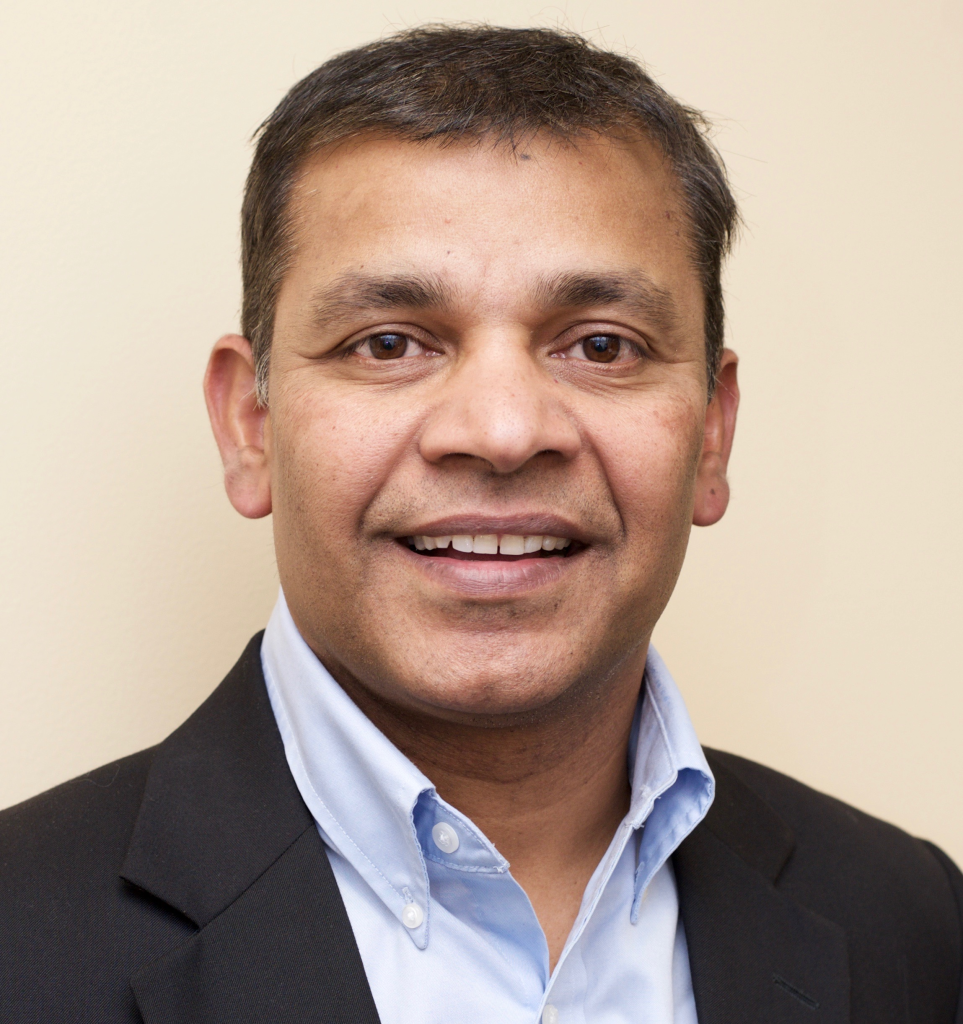
Chandra is an expert with 20+ years of experience in the cybersecurity and networking domain.
Chandra has been associated with multiple disruptive innovations for cybersecurity and networking domains.
Current innovations at Seceon is already used by 6000+ customers around the globe and make industry’s best cybersecurity affordable to organizations of any size and eliminate the needs for customers to buy 15+ products like SIEM, SOAR, NBAD, UEBA, MDR, Cloud Security, Container Security, IDS etc.
About Us:
Dark Rhiino Security’s Security Confidential is a weekly Cybersecurity podcast where Host, Manoj Tandon, talks to Infosec and Cybersecurity professionals about the current issues going on in our industry. Guests are able to share their stories about how they began their journey into cybersecurity and connect with our audience. Listeners are able to tune in through Spotify, Apple Podcasts, Google Podcasts, Amazon Music, iHeartRadio, Youtube, LinkedIn, and more.
For inquiries, please email media@darkrhiinosecurity.com
Share and spread the word!
Original podcast listings
Archive source: Original website record. Original wording and artwork retained.