
SECURITY CONFIDENTIAL
Security Confidential S11 E8 Kevin Metcalf
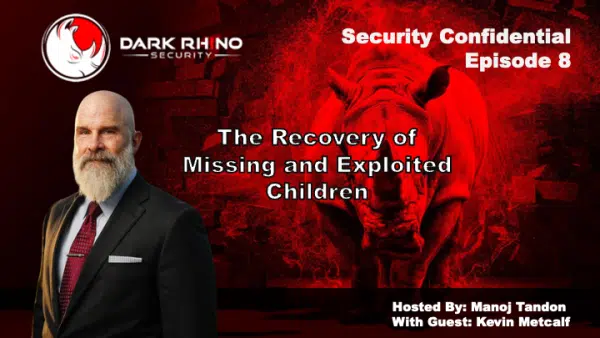
This week on Dark Rhiino Security’s Security Confidential podcast, Host Manoj Tandon welcomes Kevin Metcalf. Kevin is a former federal agent turned prosecutor, author, and founder of the National Child Protection Task Force, which brings together recognized experts in fields such as strategic legal applications, OSINT, cellular mapping and analysis, dark web investigations, and cryptocurrency to aid […]
Video
This week on Dark Rhiino Security’s Security Confidential podcast, Host Manoj Tandon welcomes Kevin Metcalf. Kevin is a former federal agent turned prosecutor, author, and founder of the National Child Protection Task Force, which brings together recognized experts in fields such as strategic legal applications, OSINT, cellular mapping and analysis, dark web investigations, and cryptocurrency to aid law enforcement agencies everywhere. Kevin has assisted with the recovery of numerous missing and exploited children and the identification and apprehension of sexual predators in multiple states.
The Recovery Of Missing and Exploited Children | Security Confidential
Chapter Titles:
00:00 Disclaimer
00:10 Introduction
00:23 Our guest
01:30 What is OSINT? How does it work?
05:10 Privacy laws
11:30 Sextortion
17:51 Financial Sextortion: How it works
20:00 When does it become statistically significant
21:33 What lead Kevin to help children
22:37 What role does law enforcement play?
25:52 A special case
28:45 OSINT, Mobile devices, and Kevins Books
34:53 Kevin’s thoughts on the ADPPA
41:19 News from Kevin
Your life is important to everyone around you. If you have or have had Suicidal thoughts and want help, please call the Suicide and Crisis Lifeline at 988You can also chat with them online | Hours: Available 24 hours | Languages: English, Spanish
Audio:
Spotify Embed: S11 E8 The Recovery of Missing and Exploited Children
Important Links:
Transcript
Manoj Tandon: Hello everyone, this is your host Manoj Tandon with another episode of Dark Rhino Security, Security Confidential. And today we actually are honored to have a guest on that really doesn’t need any introduction, at least in the InfoSec space, he certainly does not. People know him, people follow him. He is Mr. Kevin Metcalf. Kevin, for those of you who in the off chance don’t know him, is a former federal agent who turned prosecutor. He’s an author.
He’s the founder of the National Child Protection Task Force. And the task force brings together a whole bunch of recognized experts in a host of different fields, such as legal, OSINT, cellular mapping, analysis to really help children come back home. Kevin has assisted with the recovery of numerous missing and exploited children and the identification and apprehension of sexual predators in multiple states. Welcome to the show, Kevin. Thank you for being here.
Kevin Metcalf: Oh, thank you for having me. It’s an honor to be here.
Manoj Tandon: Thank you so much. I got to, we got to start with OSINT. And there’s a whole bunch of questions here around this thing. First of all, what is OSINT? What disciplines are involved with it in actually making this thing work?
Kevin Metcalf: Well, we have limited time today, so if we go back into looking at the history of intelligence, if we look at intelligence gathering—when the Air Force became really powerful, the military and the government were looking at intelligence and saying, well, we’ve got technology now, we’ve got aircraft that can fly over anywhere, we’ve got satellites starting up, we don’t really need human intelligence anymore. Turned out to be very, very wrong, and we paid the price for that.
So the gathering of intelligence, human intelligence especially—if you look at classified systems and all that data that’s there and all that information back a few decades ago, just think… Instead of all those humans going out and writing little notes, listening to conversations—what if people just put everything out on the internet so you could find it, if you knew how?
Open source intelligence before the internet was newspapers—anything publicly available. Now think about what we share today: selfies, location data, communication patterns. Most of the time we’re freely sharing this.
Then you’ve got big tech companies—location data, behavioral data—that’s big money. They’re crowdsourcing everything. You want the free app, you click “accept” without reading anything. You’re giving them your data in exchange.
Now, the amount of information out there—we can determine who people communicate with, what circles they run in, emails, phone numbers, IP addresses. But you need people who know how to search through that, triage it, validate it, and turn it into intelligence.
Manoj Tandon: So if you had access to Google’s vast databases, I imagine this would be much easier.
Kevin Metcalf: It would be, yes. But technology changes constantly—platforms change, terms of service change. So we have to keep researching and adapting.
Manoj Tandon: You’ve been a prosecutor. What is admissible as OSINT-based evidence? Is there a presumption of privacy?
Kevin Metcalf: You’re covering multiple levels here. Let’s start simple. If you’re having a private conversation in a public place—like a restaurant—others can hear it. That’s not protected.
But if you close a door, like a phone booth example from case law, that shows an expectation of privacy.
Now apply that to technology. If something is in plain view—like illegal activity visible through an open window—law enforcement can act.
With social media, if your content is publicly accessible, it can be used. If it’s private, then legal process is required—subpoenas, court orders, or search warrants depending on the level of access needed.
Manoj Tandon: So what about closed groups, like private Reddit groups?
Kevin Metcalf: If someone inside that group shares or reports it, that can trigger legal process. Once someone in the group exposes it, it’s no longer private.
Manoj Tandon: That’s important for people to understand—especially teenagers.
Kevin Metcalf: Yes, and unfortunately we’re seeing predators exploit this. They pose as teenagers, use AI, and manipulate kids.
Also, I want to clarify terminology—we don’t say “child pornography.” These are violent abuse materials. We refer to it as child sexual abuse material.
Manoj Tandon: Understood, and thank you for that clarification.
Kevin Metcalf: There’s also something called sextortion. This is a major global issue. Predators lure victims—often teenage boys—into sharing explicit content, then threaten to expose them unless they pay.
We’ve had around 20 suicides in the U.S. linked to this.
Manoj Tandon: That’s horrifying.
Kevin Metcalf: And we don’t even properly measure this problem. Ask law enforcement how many missing kids they have—they often don’t know. We measure stolen cars better than we measure missing children.
Manoj Tandon: That’s shocking.
Kevin Metcalf: It really is. And most victims are vulnerable—poverty, foster care, unstable environments. They don’t have a voice.
Manoj Tandon: Is that what drives your passion?
Kevin Metcalf: Yes. I spent years in law enforcement and counterterrorism. But when I saw what was happening to children—once you see it, you can’t unsee it. It changes you.
Manoj Tandon: What kind of people commit these crimes?
Kevin Metcalf: I’d be hesitant to generalize. I work with experts like Dr. Michael Burke who specialize in that analysis.
Manoj Tandon: How is law enforcement adopting OSINT?
Kevin Metcalf: We work thousands of cases globally. We combine open source, legal process, and specialized tools. It’s about flow—how data connects.
We’ve built investigative tradecraft by working across crime types—terrorism, trafficking, fraud—everything.
Manoj Tandon: Can you give an example?
Kevin Metcalf: We’ve solved cases starting with just images—geolocating them using environmental clues. That’s a specialized skill, but incredibly powerful.
Manoj Tandon: And mobile devices?
Kevin Metcalf: They are massive data leaks. Everything flows through them—apps, networks, cloud services. Even if someone tries to avoid detection, anomalies show up.
Manoj Tandon: That aligns with what we see—mobile devices are the biggest vulnerability.
Kevin Metcalf: Absolutely. Even leaving your phone behind can create suspicious gaps in behavior.
Manoj Tandon: What’s your view on privacy laws like ADPPA?
Kevin Metcalf: I’m pro-privacy. But we need balance. Data should be protected, but also accessible for legitimate investigations.
Criminals adapt quickly. If we remove access entirely, they benefit more than the public.
Manoj Tandon: The public seems to choose convenience over privacy.
Kevin Metcalf: Exactly. And many people don’t want to face these harsh realities.
Manoj Tandon: Final question—what’s coming up for you?
Kevin Metcalf: The National Child Protection Task Force is hosting its annual conference next week. Experts from around the world are coming together.
We work closely with organizations like Sentinel Foundation, Land and Rescue, and others. This work requires collaboration—you can’t do it alone.
Manoj Tandon: Kevin, this has been incredible. We didn’t even get through half the questions, so we’ll definitely have you back.
Kevin Metcalf: Thank you, I appreciate it.
Manoj Tandon: Take care, Kevin. Thank you again.
Kevin Metcalf: Thank you.
National Child Protection Task Force’s Website
Linkedin – National Child Protection Task Force
Kevin Metcalf’s Books
Linkedin – Kevin Metcalf
Check out the other episodes in Season 11:
Ep. 0 Cyber Basics: Lean Six-Sigma
Ep. 1 Huxley Barbee – Having ACCURATE Asset Inventory
Ep. 2 George Kamide – From Disinformation to AI (pt 1)
Ep. 3 George Kamide – From Disinformation to AI (pt 2)
Ep. 4 Phillip Wylie – He was once wrestling a 750lb Bear, Now he’s a Penetration Tester
Ep. 5 Bec McKeown – The Psychology behind our Cybersecurity Choices and Teams
Ep. 6 Bec McKeown – You CAN Train Your Mind
Ep. 7 Ben Johnson – What makes a great DevOps team?
Ep. 8 Kevin Metcalf – The Recovery Of Missing and Exploited Children
Ep. 9 Chris Rock – Terminated from Speaking at TED Global
Ep. 10 Chris Rock – Can Cyber Mercenaries Overthrow the Government?
About Kevin Metcalf
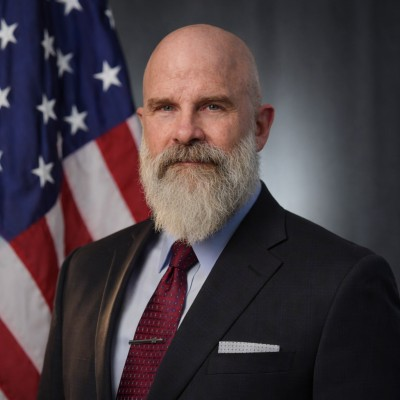
Kevin Metcalf is a former federal agent turned prosecutor and founder of the National Child Protection Task Force (NCPTF), which brings together experts in legal strategy, OSINT, cellular mapping and analysis, dark web, and data exploitation to provide investigative expertise, training, and resources that are unavailable or under-funded in most law enforcement organizations.
Kevin is involved in the recovery of missing and exploited children and the identification and apprehension of sexual predators around the world.
He is an international leader in innovative approaches to synthesizing legal, closed, and open-source information to support missing person recovery and counter-human trafficking cases worldwide.
About Us:
Dark Rhiino Security’s Security Confidential is a weekly Cybersecurity podcast where Host, Manoj Tandon, talks to Infosec and Cybersecurity professionals about the current issues going on in our industry. Guests are able to share their stories about how they began their journey into cybersecurity and connect with our audience. Listeners are able to tune in through Spotify, Apple Podcasts, Google Podcasts, Amazon Music, iHeartRadio, Youtube, LinkedIn, and more.
For inquiries, please email media@darkrhiinosecurity.com
Share and spread the word!
Original podcast listings
Archive source: Original website record. Original wording and artwork retained.